
Organisational values and culture change: why the posters are not enough
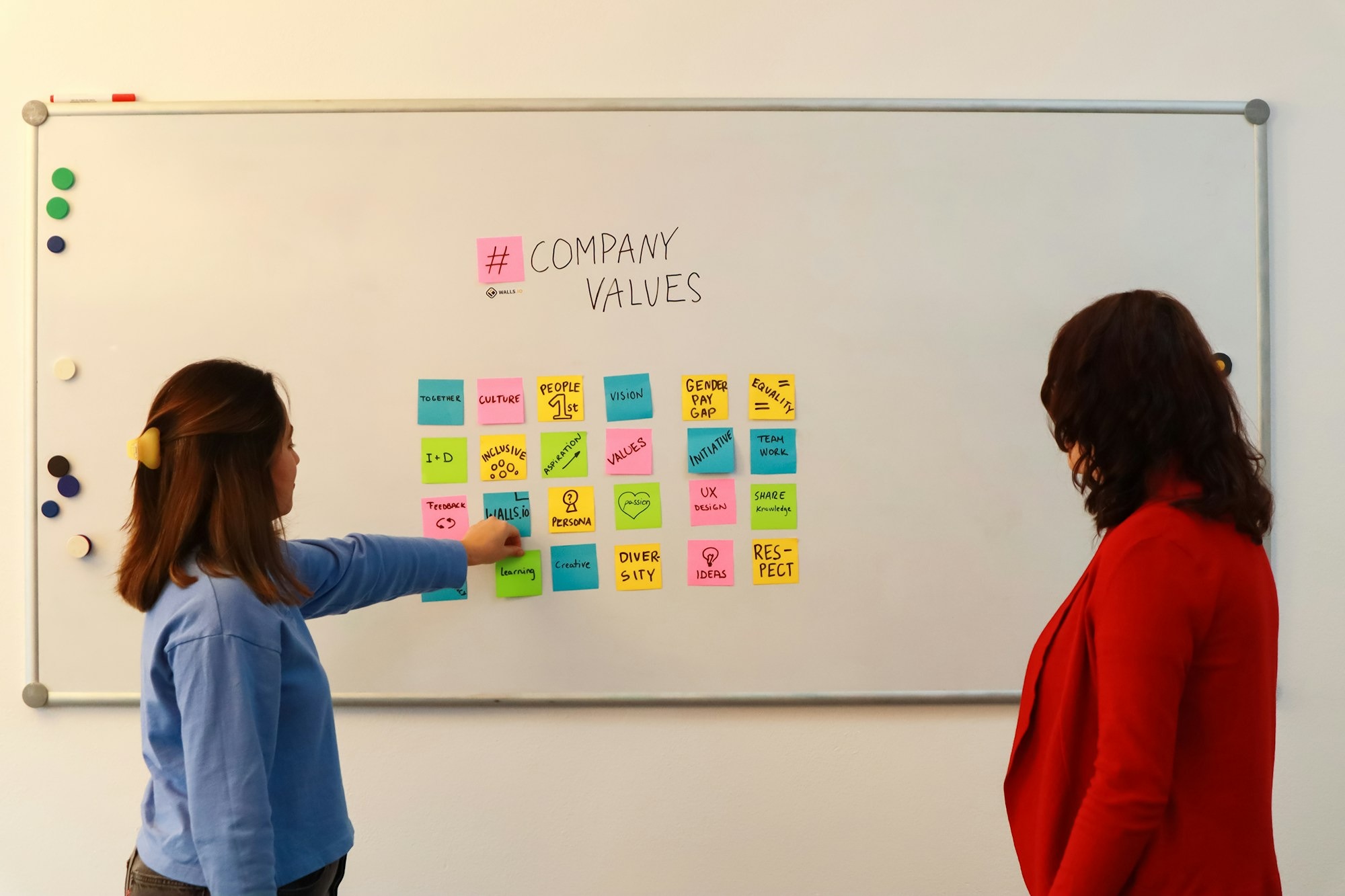

How culture change often goes
Step 1: Rewrite the values.
Step 2: Launch them.
Step 3: Lanyards. Posters. Screensavers.
Step 4: Everyone gets busy.
Step 5: A new leadership team arrives.
Step 6: Rewrite the values.
There is nothing inherently wrong with organisational values.
The problem comes when writing them is confused with changing the culture.
Values can give an organisation a shared language. They can express what matters and set expectations about how people should work. But choosing the right words is only the beginning.
Employees do not learn what an organisation values primarily through what it says.
They learn by watching what happens.
What really communicates an organisation’s values?
If you want to understand the real culture of an organisation, look at the everyday decisions people observe:
Who gets promoted?
Who gets listened to?
Which behaviours are challenged?
Which behaviours are tolerated because someone delivers results?
What happens when hitting the target conflicts with looking after people?
Does speaking up help your career or damage it?
What happens to managers who enforce the values when doing so is inconvenient?
The answers tell employees far more than a poster does.
An organisation may describe respect as one of its core values. But if people who treat colleagues badly continue to be rewarded, the reward carries the more credible message.
It may talk about collaboration. But if individual targets encourage departments to compete, employees will pay considerably more attention to the target than the poster.

What research tells us about values and organisational systems
A 2026 systematic review by Haxhiu and Marc examined the unintended consequences of management control systems. The review brought together 95 studies from management, accounting and organisational behaviour journals.
The authors considered several types of management control, including result, action, personnel and cultural controls. They found recurring links between these systems and unintended problems such as gaming, data manipulation, ethical erosion, reduced motivation and symbolic compliance.
Their findings are relevant to organisational culture change. Cultural controls built around shared values and norms can produce unintended consequences when those signals are inconsistently reinforced or poorly embedded.
Problems can also emerge when what an organisation says it values is not aligned with its other systems, particularly incentives, performance expectations and what leaders reinforce in practice.
This is the part we sometimes miss when talking about culture change.
Values do not operate on their own. They sit alongside targets, rewards, rules, performance processes and leadership behaviour. Employees have to make sense of all those signals together.
When the signals conflict, the formal values may be the least persuasive of them.
The gap between stated values and lived culture
Many organisations have values that sound entirely reasonable: respect, integrity, collaboration, compassion, excellence or inclusion.
The difficulty is rarely finding an appealing word.
You can spend six months deciding whether the value should be “collaboration”, “together” or “one team”. But the wording will make little difference if the organisation’s systems continue to reward competition between departments.
Likewise, a value of respect will struggle to mean much if people known for treating colleagues badly are repeatedly promoted. A commitment to speaking up becomes difficult to believe if those who raise concerns are labelled as troublesome or find that their careers suffer.
This gap between what an organisation says and what employees experience matters. People notice inconsistency. They watch what happens when living the values is costly, inconvenient or in tension with a performance target.
That is when the organisation reveals which message carries the most weight.

Why values launches do not change organisational culture
A values launch can create visibility. It can introduce the language and show that leaders want to make a commitment.
But visibility is not the same as culture change.
The launch does not determine who is recruited. The screensaver does not decide who is promoted. The lanyard does not challenge an influential person whose behaviour contradicts the values.
Those things happen through organisational decisions and through the actions leaders take when there is something at stake.
If the values appear only in presentations, induction materials and annual reports, employees may learn that they are largely symbolic. If the values regularly shape difficult decisions, they begin to carry more meaning.
What it means to embed organisational values
Values become part of culture when they affect how the organisation operates.
That includes:
Recruitment: Are people selected only for what they can deliver, or is how they work with others taken seriously too?
Promotion: Does progression reflect the stated values, including when a high performer behaves in ways that contradict them?
Performance: Are values translated into clear behavioural expectations and considered in performance conversations?
Reward: Do incentives support the culture the organisation says it wants, or encourage people to behave differently?
Accountability: Are breaches addressed consistently, regardless of seniority, status or results?
Leadership behaviour: Do leaders model and reinforce the values through their everyday choices?
Pressure: What gets tolerated when deadlines, targets or financial demands intensify?
Embedding values does not mean adding them to more documents. It means checking whether decisions, systems and leadership behaviour support or undermine them.

Questions to ask before rewriting the values
Before beginning another exercise to refresh the wording, it may be more useful to understand how the current culture actually works.
Ask:
What behaviours are rewarded here in practice?
Who succeeds, and what does that teach others?
Where do targets or incentives contradict the stated values?
What behaviour is tolerated, and why?
Do leaders respond consistently when the values become inconvenient?
Are managers supported when they hold people accountable?
What happens to employees who challenge decisions or raise concerns?
Which systems would need to change if the values were taken seriously?
The answers may reveal that the problem is not the wording. It is the distance between the words and the organisation’s choices.
Culture change begins with decisions
Values can be useful. They can name what an organisation wants to stand for and help create a shared language around behaviour.
But culture change starts when those values affect decisions about recruitment, promotion, performance, reward, accountability and leadership behaviour.
It is also revealed in what gets tolerated when the pressure is on.
Because if your systems contradict your values, I know which one employees are likely to believe.
I help organisations diagnose the behaviours, leadership practices and systems that are really shaping their culture, and turn that insight into meaningful change.
Reference:
Haxhiu, E., & Marc, M. (2026). "Unintended consequences of management control systems: A systematic review and conceptual framework". Journal of Management Control.

Nicole Williams is an occupational and coaching psychologist specialising in culture repair, team dynamics and psychologically safe workplaces.
Comments