
Poor communication in teams: is communication really the problem?

“We need to communicate better” must be one of the most common diagnoses in organisational life.
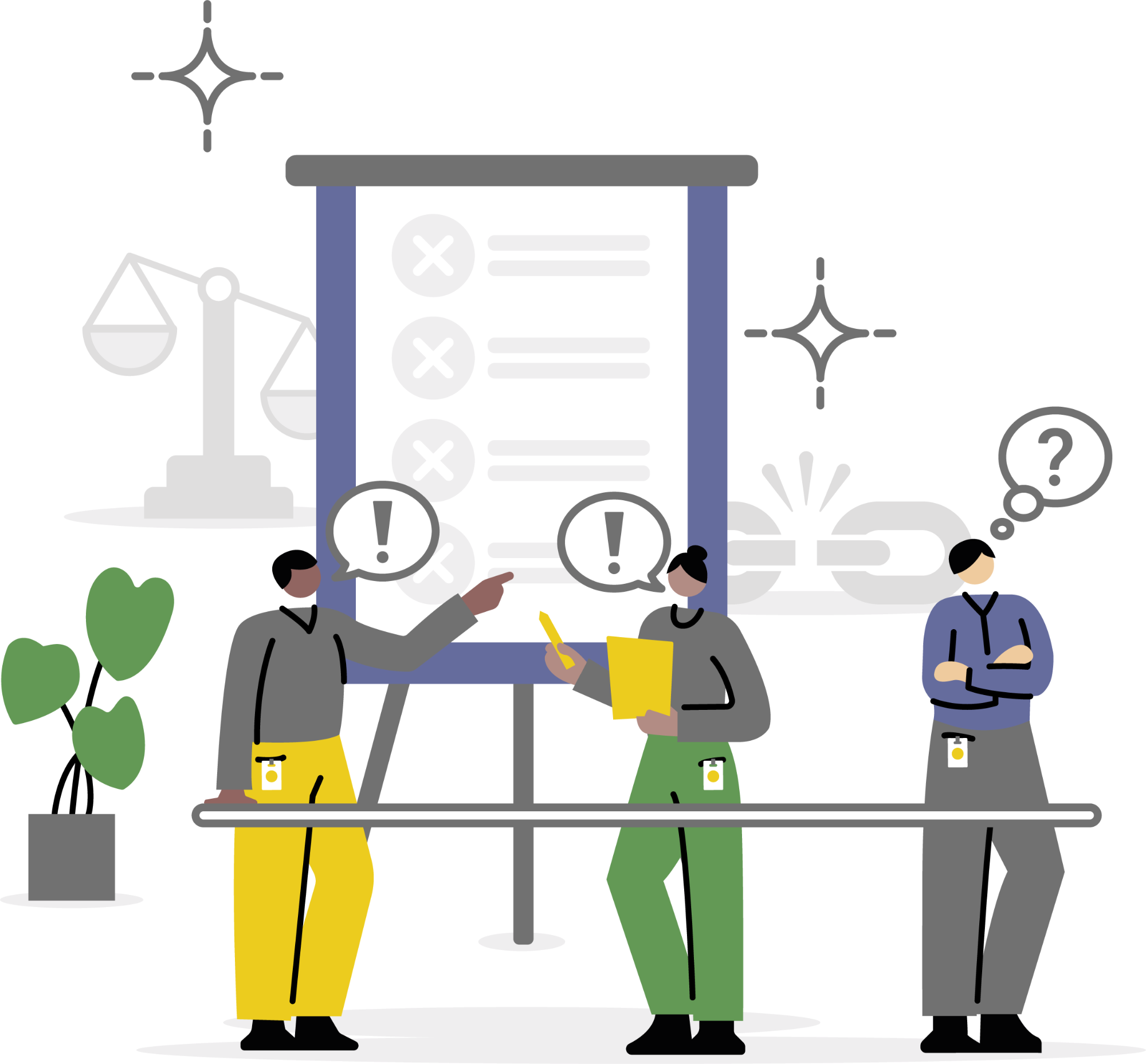
A team is not working well together. Information is not being shared. Meetings have become tense. People are making assumptions about one another. Problems are being discussed everywhere except in the room where they need to be discussed.
The diagnosis?
“We need to improve communication.”
Maybe.
Communication training can work. But before prescribing it, we need to understand whether a lack of communication skills is actually the problem.
Does communication training work?
There is evidence that communication training can make a difference.
A 2024 systematic review by Hamlin and colleagues found that communication skills training can improve outcomes such as communication competence, self-efficacy and empathy.
More recently, Sarıköse and colleagues reviewed 30 randomised and quasi-experimental studies of interprofessional training. Their 2026 review found improvements in communication and teamwork, including information exchange, clarity, coordination and role clarity, although some outcomes varied according to context and population.
So this is not an argument against communication training.
It is an argument against prescribing it before we understand the problem.
Sometimes people genuinely do not have the skills to communicate well. They may need to become better at listening, explaining their thinking, checking assumptions, giving feedback or handling disagreement.
But sometimes people already know how to communicate perfectly well.
Something else is getting in the way.
When poor communication is a symptom
Imagine a team in which people rarely challenge a senior colleague during meetings. It might be tempting to conclude that they need to learn how to speak up more confidently.
But what if previous attempts to raise concerns have been dismissed or punished? What if people have learned that speaking honestly carries consequences?
The visible problem is poor communication. The underlying problem is not necessarily a lack of skill.
The same applies when colleagues hold back information, avoid difficult conversations or speak about one another rather than to one another. These behaviours may look like communication failures, but they can also be signs of:
low trust;
earlier attempts to raise concerns going badly;
unclear decision-making authority;
competing priorities between professional groups;
unspoken power or status differences;
unresolved conflict; or
a belief that honesty is not worth the consequences.
None of those problems disappears because everyone attends a workshop on active listening.
Why teams avoid the conversations they need to have
Good workplace communication depends on more than knowing the right technique.
People make judgements about what is safe, useful and possible in a particular environment. If a team member expects to be ignored, embarrassed or treated differently for raising an issue, remaining quiet may feel like the sensible option.
If nobody knows who can make a decision, more discussion may simply create more frustration. If two groups are working towards competing priorities, clearer communication may expose the conflict without resolving it. If a relationship has been damaged and never repaired, even a neutral comment may be interpreted through a history of mistrust.
In each case, the team may appear to have a communication problem. Yet teaching a communication model will not remove the condition that is shaping how people communicate.
This distinction matters because it changes the intervention.
What does “we need to communicate better” actually mean?
When somebody says that a team needs to communicate better, it is worth slowing the conversation down.
What, specifically, is happening?
Are people failing to share the information others need? Are messages unclear? Are colleagues talking over one another? Are decisions made without the right people? Do meetings avoid the real issue? Are people silent in formal discussions and outspoken afterwards?
These are all communication problems, but they are not necessarily caused by the same thing.
The next question is even more important:
Do people lack the skills, or are conditions within the team or organisation making good communication difficult?
Those are two different problems, and they require different interventions.
When communication training is the right intervention
Communication training may be exactly what a team needs when people lack particular skills or have had little opportunity to practise them.
For example, a team may benefit from structured development if people struggle to listen accurately, express disagreement constructively, clarify roles in conversation or exchange important information clearly. Training can provide a shared approach, opportunities to practise and feedback on how people communicate.
The evidence reviewed by Hamlin and colleagues, and by Sarıköse and colleagues, gives us reason to take that possibility seriously. Communication and interprofessional training can improve relevant outcomes.
The question is not whether training can work. It is whether training matches the problem this particular team is experiencing.
When the team needs something else
If people have the necessary skills but do not feel able or willing to use them, the work needs to go deeper.
A team with low trust may need to understand how trust was damaged and what would help rebuild it. A team carrying unresolved conflict may need a supported process for addressing what happened. If roles and authority are unclear, it may need decisions about responsibilities and governance rather than another conversation framework.
Where power or status is shaping who speaks and who is heard, leaders may need to examine their own behaviour and the wider norms of the organisation. Where professional groups have competing priorities, the work may involve clarifying shared aims and confronting genuine tensions rather than asking people to communicate more positively.
These interventions are not interchangeable. Choosing the wrong one risks placing responsibility on individuals for a problem created or sustained by the system around them.
Diagnose the barrier before choosing the solution
When poor communication is visible, begin with curiosity rather than a ready-made solution.
Ask:
What communication behaviour are we concerned about?
When and where does it happen?
Is it happening across the team or between particular people or groups?
Do people know what effective communication would look like here?
What happens when somebody speaks openly, disagrees or raises a concern?
Are roles, priorities and decision-making authority clear?
Is there unresolved conflict underneath the current pattern?
What might make honest communication feel difficult or unsafe?
The answers can help distinguish a skills gap from a problem of trust, power, structure, conflict or psychological safety.
Sometimes communication training is exactly what a team needs.
Sometimes poor communication is simply where a deeper problem becomes visible.
Before trying to improve the communication, diagnose what is getting in the way of it.
If poor communication in your team is part of a wider pattern of conflict, low trust or avoidance, a culture diagnostic can help uncover what is sustaining it before you decide what support is needed.
References:
Hamlin, E. L. B., McGloin, R., & Bridgemohan, A. (2024). Communication skills training: A quantitative systematic review. Development and Learning in Organizations: An International Journal, 38(6), 18–22.
Sarıköse, S., Sengul, T., Lopez, V., & Kirkland-Kyhn, H. (2026). Fostering healthy work environments through interprofessional simulation: Teamwork, communication, psychological safety—Systematic review of randomised controlled and quasi-experimental studies. Journal of Advanced Nursing, 1–27.

Nicole Williams is an occupational and coaching psychologist specialising in culture repair, team dynamics and psychologically safe workplaces.
Comments