
You cannot workshop your way out of a culture that rewards the wrong things

When workplace bullying, harassment or incivility becomes visible, organisations often focus their response on the people closest to the behaviour.
They may investigate the individuals involved, train the line manager, commission a team workshop or remind employees about expected standards.
These actions may be necessary, but they can also leave a more difficult question unanswered...
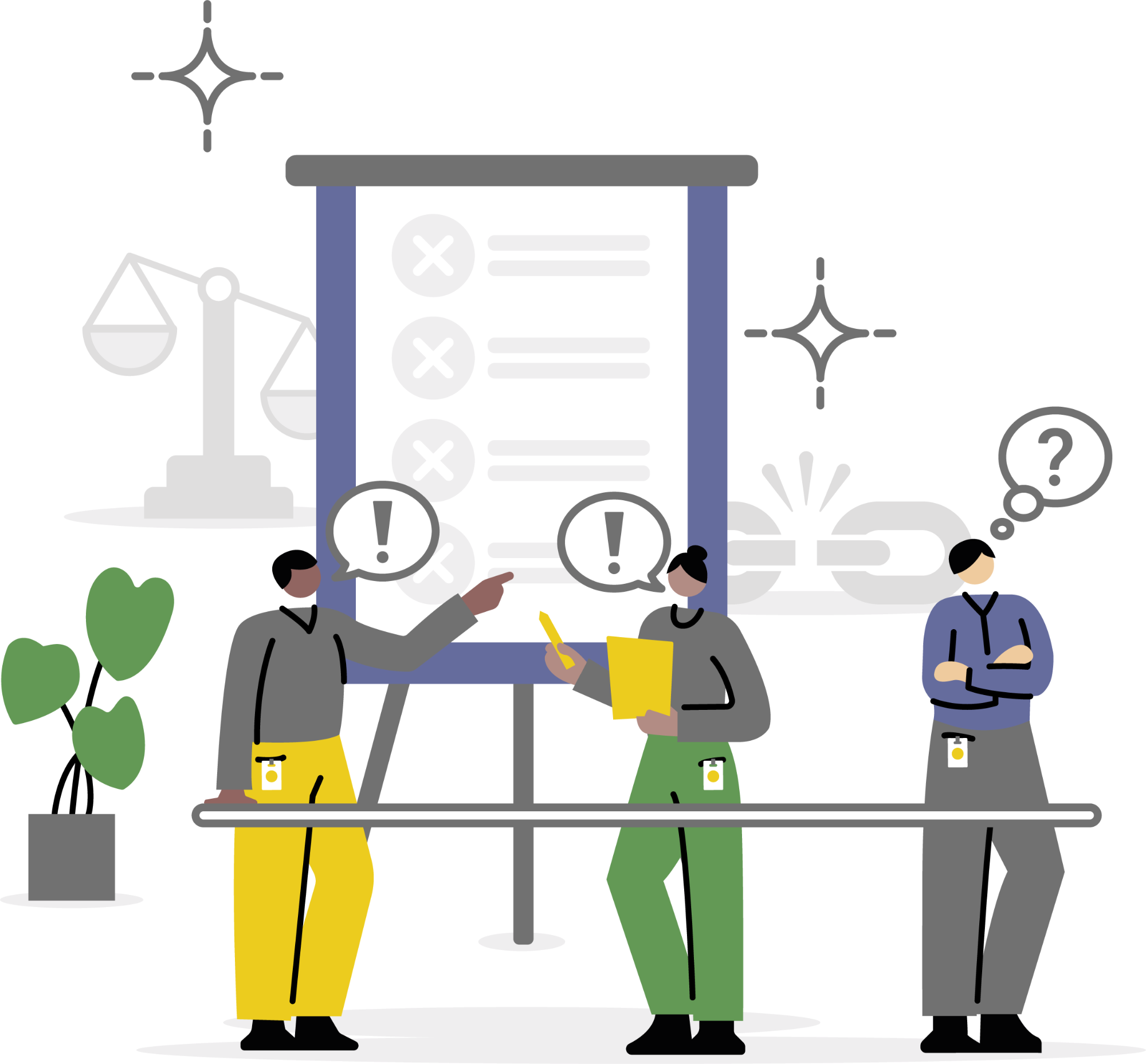
What is happening in the wider organisation that allows these behaviours to develop or continue?
New research by Dollard, Loh and Bailey provides further evidence that workplace mistreatment should not be understood simply as a problem between difficult individuals.
Their findings suggest that the values and priorities demonstrated by senior management help shape the organisational climate in which bullying and harassment either become less likely—or are allowed to flourish.
What is psychosocial safety climate?
The research focuses on psychosocial safety climate, often abbreviated to PSC.
Psychosocial safety climate refers to employees’ shared perceptions of whether their psychological health and safety are genuinely protected through management priorities, organisational practices and systems of communication.
It is not simply whether an organisation has a wellbeing policy.
It is whether employees believe that senior leaders genuinely prioritise psychological health when making decisions.
For example:
Are concerns about psychological harm taken seriously?
Does the organisation act when harmful behaviour is reported?
Are managers given the authority and support to protect employees?
Is information about psychological health communicated openly?
Are sufficient resources allocated to preventing harm?
What happens when employee wellbeing and productivity appear to compete?
The answers employees observe in practice shape their understanding of what the organisation really values.
What did the researchers find?
The researchers used two large studies involving Australian public-sector organisations.
The first examined senior management values and priorities, supervisors’ perceptions of psychosocial safety climate, supervisor support and employees’ experiences of mistreatment across multiple organisational levels.
The second used data gathered at three points in time across 117 agencies. Senior management values and priorities measured at the first point predicted supervisors’ perceptions of psychosocial safety climate at the second, which in turn predicted employees’ reports of bullying at the third.
Overall, more people-focused senior management values and priorities were associated with a stronger psychosocial safety climate and lower levels of workplace mistreatment.
The study also identified an important relationship between organisational climate and local management.
Supportive supervisors were associated with lower mistreatment within their teams. However, their supportive actions were more effective when the wider organisation also had a strong psychosocial safety climate.
In other words, a good line manager matters.
But the wider system can either strengthen or constrain what that manager is able to achieve.
Why supportive line managers cannot carry the whole system
Organisations often place considerable responsibility for workplace culture onto line managers. Managers are trained to hold difficult conversations, address conflict, support wellbeing and respond to behavioural concerns. This is important work.
But managers do not operate independently of the organisation around them. Consider a manager who attempts to challenge a highly influential employee whose behaviour is harming colleagues. What happens next?
Does senior leadership support the manager? Does HR provide clear and consistent guidance? Is the behaviour addressed even if the employee delivers strong results? Or is the manager encouraged to handle the situation informally because the person is considered too valuable, powerful or difficult to confront?
Similarly, imagine a manager who raises concerns about excessive workloads and their impact on psychological health. Does the organisation respond by reviewing demands and resources? Or is the manager reminded that performance targets still need to be met?
These experiences teach managers what the organisation genuinely prioritises. They also teach employees whether the values described in policies and communications can be trusted.
A manager may try to create a safe and respectful team. But their influence will be limited if the wider organisation repeatedly rewards, tolerates or overlooks contradictory behaviour.
The productivity-versus-people dilemma
A central idea within the paper concerns the tension between productivity and people-focused priorities. Organisations naturally need to deliver results. A people-focused culture is not one in which performance becomes unimportant or difficult behaviour is excused. The problem arises when productivity is pursued at the expense of psychological health.
The researchers propose that when senior leaders repeatedly activate and reward particular goals, employees throughout the organisation align their attention and behaviour with those priorities. Competing goals receive less attention. If delivery is consistently rewarded while the interpersonal cost of achieving it is overlooked, people learn that results matter more than how those results are produced.
That can create conditions in which:
harmful conduct from high performers is tolerated;
managers avoid confronting influential individuals;
employees feel pressure to remain silent;
workload concerns are reframed as resilience problems;
incivility becomes normalised under pressure; and
speaking up is viewed as obstructing delivery.
The organisation may still communicate values such as respect, compassion and inclusion.
But employees judge culture primarily through what leaders repeatedly pay attention to, reward and act upon.
Culture is revealed under pressure
Most organisations find it relatively easy to promote positive values when things are going well. The real test comes when priorities compete.
What happens when:
a high performer is accused of bullying colleagues;
addressing behaviour could affect service delivery;
an investigation may expose leadership failures;
reducing workloads may delay an important target;
a senior employee resists challenge;
an employee raises concerns that are inconvenient or uncomfortable?
These moments reveal the organisation’s true hierarchy of priorities.
If employees repeatedly see delivery placed above dignity, safety or fairness, that becomes part of the culture—regardless of what is written in the values framework. Culture is therefore not merely what senior leaders say they value. It is what the organisation consistently protects when choices become difficult.
Why isolated culture interventions fail
This research also helps explain why well-intentioned culture initiatives sometimes create little lasting change.
An organisation may introduce:
a civility workshop;
line-manager training;
a respect-at-work campaign;
a new behavioural framework;
resilience training;
a wellbeing programme;
a refreshed set of organisational values.
Any of these interventions may be useful. But they will have limited effect if the surrounding system continues to reinforce the opposite message. For example, a civility workshop is unlikely to transform behaviour if senior people continue to communicate aggressively without consequence.
A speak-up campaign will not build trust if employees see that previous concerns led to no meaningful action.
Manager training cannot compensate for senior leaders who fail to support managers when they challenge harmful behaviour.
A wellbeing programme cannot neutralise workloads, uncertainty or leadership practices that continue to create psychological harm.
This is why organisations cannot simply workshop their way out of a culture that rewards the wrong things.
The formal intervention and the informal organisational signals need to align.
What this means for culture diagnostics
When bullying, exclusion or incivility becomes visible within a particular team, it is tempting to diagnose the problem entirely at that level.
The organisation may conclude that:
there is a difficult manager;
certain employees have a personality clash;
the team needs to communicate better;
a particular clique needs to be broken up;
behavioural expectations need to be restated.
These may all form part of the picture.
But a robust culture diagnostic should also look upwards and outwards.
It should examine:
Senior leadership priorities
What do senior leaders consistently discuss, measure and reward?
What receives attention when the organisation is under pressure?
Organisational responses to concerns
What happens when employees raise issues about bullying, exclusion or psychological harm?
Are concerns investigated fairly and acted upon?
Management support
Do line managers believe senior leaders and organisational systems will support them when they challenge harmful behaviour?
Reward and accountability
Are people held accountable for how they achieve results, as well as whether they achieve them?
Are high-performing or influential employees treated differently?
Work design and resources
Are people expected to meet demands without sufficient time, staffing, authority or support?
How might these pressures be contributing to conflict and incivility?
Psychological safety
Do employees feel able to raise concerns, disagree or admit mistakes without fearing negative interpersonal or career consequences?
Consistency between messages and practice
Do organisational decisions reflect the values communicated in policies, leadership statements and wellbeing initiatives?
These questions shift the diagnosis from:
“Who is behaving badly?”
to:
“What combination of individual behaviour, leadership and organisational conditions is producing and sustaining this pattern?”
That does not remove individual accountability. It makes accountability more complete.

What this means for culture repair
Effective culture repair requires action at more than one level.
At an individual level, harmful behaviour may need to be challenged through feedback, performance management, coaching or formal processes.
At a team level, people may need clearer expectations, repaired working relationships, stronger leadership practices and safer ways to raise concerns.
At an organisational level, senior leaders may need to examine whether priorities, decisions and reward systems are undermining the culture they say they want.
This could include:
making behavioural standards part of performance accountability;
ensuring high performers are not protected from challenge;
supporting managers who address inappropriate conduct;
acting consistently when concerns are raised;
reviewing workloads and resources that create damaging pressure;
communicating transparently about difficult decisions;
monitoring psychosocial risks alongside operational performance; and
examining whether senior leadership behaviour models the expected culture.
Without these wider changes, local interventions can become temporary pockets of improvement within an unchanged system.
An important research caveat
The paper provides strong support for a systemic pathway between senior management priorities, psychosocial safety climate and workplace mistreatment.
One of the studies used multisource data gathered at three points in time, which strengthens the researchers’ ability to examine the proposed sequence of relationships. However, this was field research rather than a controlled experiment.
The findings should therefore not be interpreted as proving that senior management values alone cause every case of bullying or harassment. Workplace mistreatment is complex. Individual behaviour, team dynamics, job design, professional hierarchies and wider organisational pressures may all contribute.
The studies were also conducted in Australian public-sector organisations, so the precise findings should be generalised thoughtfully to other national and sector contexts.
Nevertheless, the central implication is compelling: The conditions that protect employees from mistreatment are not created only through local management or individual behaviour.
They are shaped by the priorities signalled from the top of the organisation.
Look beyond the visible behaviour
When workplace mistreatment emerges, organisations understandably want to stop the immediate behaviour. But meaningful culture repair also requires an examination of the environment in which that behaviour has developed.
Senior leaders should ask:
What are we signalling matters most?
What happens when productivity and psychological health appear to compete?
Which behaviours are rewarded, tolerated or quietly overlooked?
Do managers feel supported when they challenge harmful conduct?
Do employees believe that raising concerns leads to action?
Are our organisational systems reinforcing the culture we say we want?
Bullying and incivility may become most visible within individual relationships and teams. But their causes and sustaining conditions can sit much further up the system.
Culture is not created through statements of intent alone.
It is shaped through the priorities people see enacted every day, and particularly through the decisions leaders make when the pressure is on.

How I can help
I support organisations to diagnose and repair toxic, fragmented and high-conflict workplace cultures.
My approach examines not only visible behaviour, but also the leadership, team and systemic conditions allowing it to emerge or continue.
This can include confidential staff interviews, analysis of cultural patterns and informal power dynamics, leadership consultation, practical culture repair recommendations and bespoke team interventions.
Where repeated workshops or behavioural initiatives have failed to create lasting change, a deeper diagnostic can help uncover what the wider system may be reinforcing.
Reference:
Dollard, M. F., Loh, M. Y., & Bailey, T. S. (2026). The fish rots from the top: How senior management values and priorities shape worker mistreatment through psychosocial safety climate (PSC). European Journal of Work and Organizational Psychology. DOI: 10.1080/1359432X.2026.2648305

Nicole Williams is an occupational and coaching psychologist specialising in culture repair, team dynamics and psychologically safe workplaces.
Comments