
A close-knit team isn’t always a healthy team
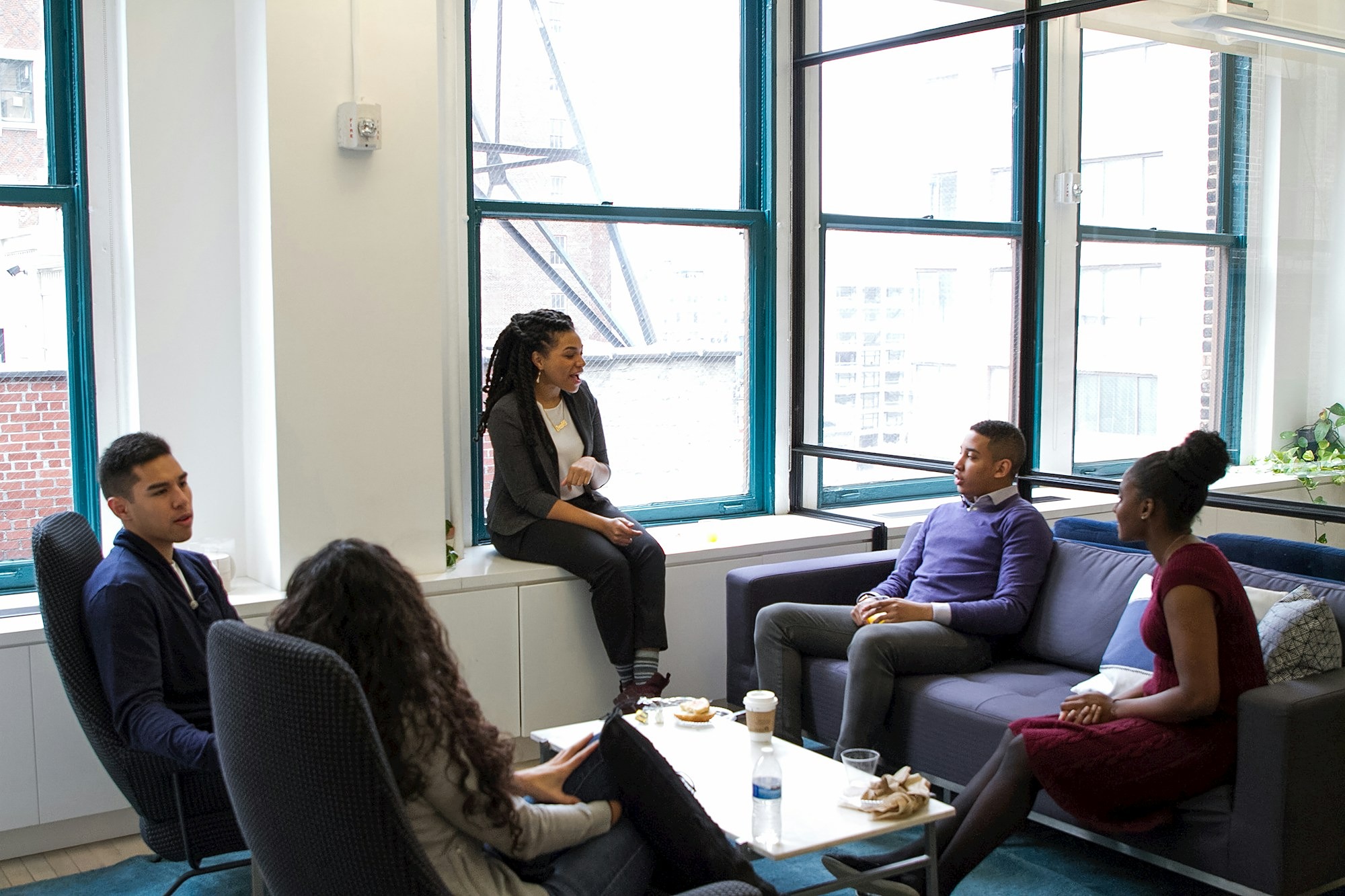
Workplace friendships can be a real source of support. They give people someone to turn to after a difficult meeting, make demanding work feel more manageable and create a sense of belonging.
But relationships at work can also have a less positive side.

I was interested to read The Catch-22 of Workplace Relationships by Krystal Duarte, Colleen Tolan and Lisa Kaplowitz. The article looks at the hidden effort involved in building and maintaining workplace relationships, particularly for women.
The authors describe women as often becoming the ‘social glue’ within teams. They may be the people who check in on colleagues, welcome new starters, organise social events and step in when relationships become strained.
This work matters. It can help people feel connected and keep a team functioning. Yet it is often invisible often, unrewarded and carried alongside someone’s formal role. The article also points to a difficult tension: workplace friendships can support women’s careers, while maintaining those same relationships can add to their workload and stress.
There is another side to this that I think deserves attention.
The people who act as the social glue within a team may also hold considerable informal power.
The influence of the ‘social glue’
Every workplace has both formal and informal structures.
The formal structure tells us who manages whom, how decisions should be made and where responsibility sits. The informal structure tells us who people actually listen to, who knows what is happening and whose approval matters.
The person at the centre of a team’s relationships may not be the most senior person in the room. But they may have a strong influence over how people interpret events, whose version of a situation is believed and who is treated as part of the group.
That influence can be used positively. Someone who understands the team well may help a new colleague settle in, notice when another person is struggling or ease tensions before they become more serious.
But the same influence can also reinforce unhealthy dynamics, sometimes without anyone making a deliberate decision to exclude somebody.
A person may be left out of informal conversations. Their behaviour may be interpreted less generously than that of established group members. Information may circulate through friendship networks before it reaches everyone else. Concerns raised about a well-liked colleague may be dismissed because they do not fit the group’s shared view of that person.
In these situations, the relationships that provide security and belonging for some people can make work feel uncertain and isolating for others.
Closeness and inclusion are not the same thing
Leaders often describe a team as ‘very close’ as though this is proof of a healthy culture.
It may be, but closeness on its own tells us very little about how the team works.
A close group can be supportive, generous and open to others. It can also become protective of its existing relationships and resistant to challenge. The stronger the bonds within the group, the more difficult it may be for someone outside it to question what is happening.
This is one reason team culture can look very different depending on whom you ask. Members of an established friendship group may experience the team as trusting and psychologically safe. They can speak openly, make mistakes and rely on others to support them. Someone outside that group may experience the same team as guarded, excluding or unsafe.
Both accounts may be genuine. Rather than asking only whether a team is close, leaders need to understand how that closeness operates:
~ Who is connected to whom?
~ Who is doing the work of maintaining those relationships?
~ Whose opinions carry weight?
~ Who receives support and the benefit of the doubt?
~ What happens when somebody disagrees with the group?
~ And how easy is it for a new or less established person to belong without having to conform?
These questions tell us much more about the culture than whether colleagues get on socially.

When relationships become informal routes to influence
The Psychology Today article also discusses the role workplace cliques can play in career progression. In a survey of 638 working professionals, including 346 women, respondents described promotions and pay decisions being shaped by friendship groups and pre-existing preferences.
This is where workplace relationships become an organisational issue, rather than simply a matter of personal compatibility.
If access to information, support or opportunity depends heavily on being part of the right group, formal processes may appear fair while informal advantages continue underneath them.
The same can happen when leaders rely on well-connected team members to tell them what is happening. The information they receive may reflect the experience of the dominant group rather than the team as a whole.
This does not necessarily mean anyone is deliberately misleading the leader. People naturally see events through their own relationships and loyalties. But if leaders do not seek out other perspectives, they can easily mistake one group’s experience for the shared culture.
Why more team building may not solve it
The article recommends creating opportunities for healthy relationships through approaches such as team building and mixed mentoring.
There can be value in bringing people together. But where a team already has entrenched cliques or informal power imbalances, creating more opportunities to socialise may not change the underlying problem.
It could even reinforce it if the same people remain at the centre and those outside the group continue to feel peripheral.
In my work with teams experiencing conflict, incivility or clique-driven behaviour, the difficulty is rarely that colleagues have not spent enough time together. More often, the team needs help to understand the patterns that have developed between people and the conditions allowing those patterns to continue.
That means looking beyond individual personalities. It involves examining how decisions are made, how concerns are handled, whether standards are applied consistently and what happens when someone challenges an established group.
A team-building day cannot, on its own, resolve problems rooted in informal power, favouritism or exclusion.
Looking beneath the surface
Workplace relationships matter enormously. They can make demanding work more sustainable and give people the support they need to develop and progress.
The relational work involved in maintaining a team also deserves to be recognised and shared more fairly. Women should not automatically be expected to carry responsibility for everyone else’s wellbeing, social connection and morale.
At the same time, organisations need to remain curious about how relationships shape the wider culture.
~ Who do they connect with?
~ Who do they leave out?
~ What work is required to maintain them?
~ And how much influence do they give to the people at their centre?
A team can be friendly, sociable and extremely close while still being difficult for some people to work in.
Understanding that difference is often the first step towards seeing the culture as it really is.

Nicole Williams is an occupational and coaching psychologist specialising in culture repair, team dynamics and psychologically safe workplaces.
Comments