
When feedback doesn’t land: Understanding feedback resistance in workplace culture

Feedback resistance in workplace culture is often discussed as an individual issue. People are described as defensive, closed, or unwilling to change. That explanation may be too narrow.
In many organisations, feedback resistance appears among capable, motivated professionals who value learning and development. This suggests resistance may not always reflect attitude or intent. It may relate to how feedback is experienced psychologically within a specific cultural context.
Understanding this matters because feedback practices are one of the most common levers used in culture change efforts.
Why feedback may struggle to create change
Organisations invest significant time and resource in feedback systems, including:
performance reviews
360-degree feedback
leadership feedback training
competency frameworks
Despite this, feedback does not always lead to reflection or behavioural change. One possible explanation is that feedback conversations can activate threat, particularly when they are linked to performance, reputation, or progression.
When perceived threat increases, reflective capacity may reduce. In those moments, people may manage the feedback emotionally rather than engage with it cognitively.
This does not mean the feedback is wrong. It may indicate that the conditions needed for reflection are not fully in place.
The role of unconscious awareness in feedback
Some psychological perspectives describe a form of knowing that exists before it is consciously articulated. This is sometimes referred to as the unthought known.
Applied to feedback, this suggests that a person may already have some awareness of the issue being raised, but that awareness may be felt rather than clearly thought or spoken. Engaging with it may feel unsettling or threatening, particularly if it connects to identity, competence, or professional credibility.
For example, a manager may receive feedback that their communication style feels dismissive in meetings. On the surface, they may respond with surprise or disagreement. However, they may also recognise a familiar discomfort, perhaps a tension they feel before meetings or a recurring sense that relationships feel strained. That discomfort may reflect an awareness that has not yet been fully acknowledged or put into words.
If the feedback brings that awareness too close too quickly, defensive responses such as rationalising, minimising, or shifting focus may emerge. This does not necessarily mean the feedback is inaccurate or that the person is unwilling to reflect. It may indicate that the awareness exists but is not yet accessible in a way that feels psychologically safe.
This perspective can help explain why feedback sometimes feels ineffective even when it appears clear and well intentioned.
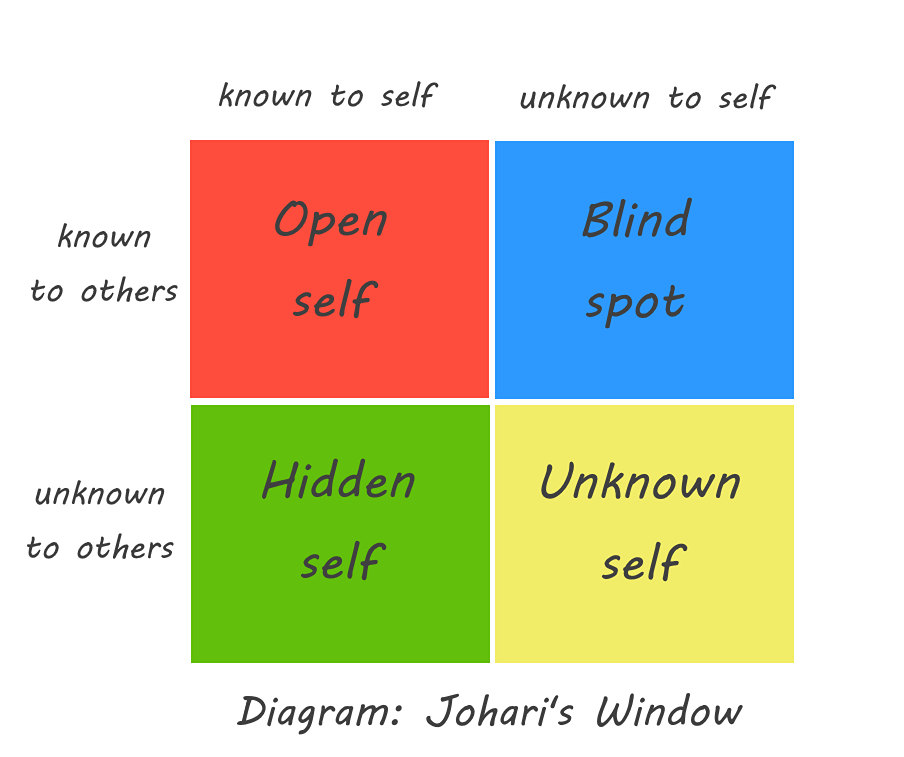
Rethinking feedback and self-awareness models
Models such as Johari’s Window are often used to support feedback and self-awareness. While useful, they may not fully account for unconscious blocking.
An adapted way of thinking suggests that some feedback sits behind a psychological barrier. The information exists, but access to it is restricted.
In these situations:
repeating the feedback may increase resistance
adding more data may not help
pushing for insight may reduce psychological safety
This points to feedback being as much a cultural and relational issue as a technical one.
Defence mechanisms that may appear in feedback conversations
Research and applied practice suggest that certain defence mechanisms commonly appear in workplace feedback conversations. These can include:
Denial: Discounting the feedback
Rationalisation: Explaining behaviour through logic or narrative
Projection: Attributing the issue to others
Turning against self: Harsh self-criticism
Intellectualisation: Staying abstract to reduce emotional impact
Splitting: All-or-nothing thinking
Acting out: Behavioural responses instead of reflection
Reaction formation: Expressing the opposite of what is felt
Rationalisation is particularly common. It often sounds reasonable and coherent, which can make it difficult to distinguish from genuine reflection.
Experience, confidence, and working with resistance
There may be differences in how feedback givers notice and respond to resistance.
More experienced practitioners often appear more attuned to:
subtle narrative shifts
emotional changes during conversations
signs of identity threat
They may be more willing to pause the content of the feedback and attend to the process of the interaction itself. This suggests that working with feedback resistance may be a developmental capability rather than an innate skill.

Feedback as a feature of organisational culture
Feedback does not happen in isolation. It sits within organisational culture. Cultural factors that may influence feedback resistance include:
low psychological safety
high performance pressure
unclear intent behind feedback processes
histories of blame or punitive responses
Where feedback is experienced primarily as evaluation, defensive responses may be more likely. Where it is experienced as developmental, engagement may increase.
This distinction is particularly relevant for organisations attempting culture repair or culture change.
A different way to approach feedback resistance
Rather than asking “Why is this person being defensive?”, an alternative question may be:
"What might feel at risk for this person in this conversation?"
Assuming that a psychological barrier may be present can change how feedback is approached. This may involve:
slowing the conversation
naming uncertainty rather than certainty
reflecting emotional responses alongside behaviour
checking readiness before challenge
noticing the feedback giver’s own reactions
Insight is more likely to emerge when curiosity is maintained on both sides.
Implications for culture diagnostics and culture repair
If feedback consistently fails to support learning, this may signal a broader cultural issue rather than an individual one.
Patterns of feedback resistance can provide useful diagnostic information about:
psychological safety
trust in leadership
perceived fairness
tolerance for vulnerability
For organisations working on culture repair, feedback conversations are often a key intervention point. How feedback is experienced may offer insight into the deeper cultural conditions that need attention.

Closing reflection
Feedback resistance may not be something to eliminate. It may be something to understand.
When organisations attend to the psychological dynamics of feedback, conversations may become less adversarial and more reflective. This does not guarantee change, but it may increase the conditions under which change becomes possible.
If feedback culture feels stuck, the issue may not be technique. It may be culture.
Comments