
The gap between what leaders hear and what employees really think
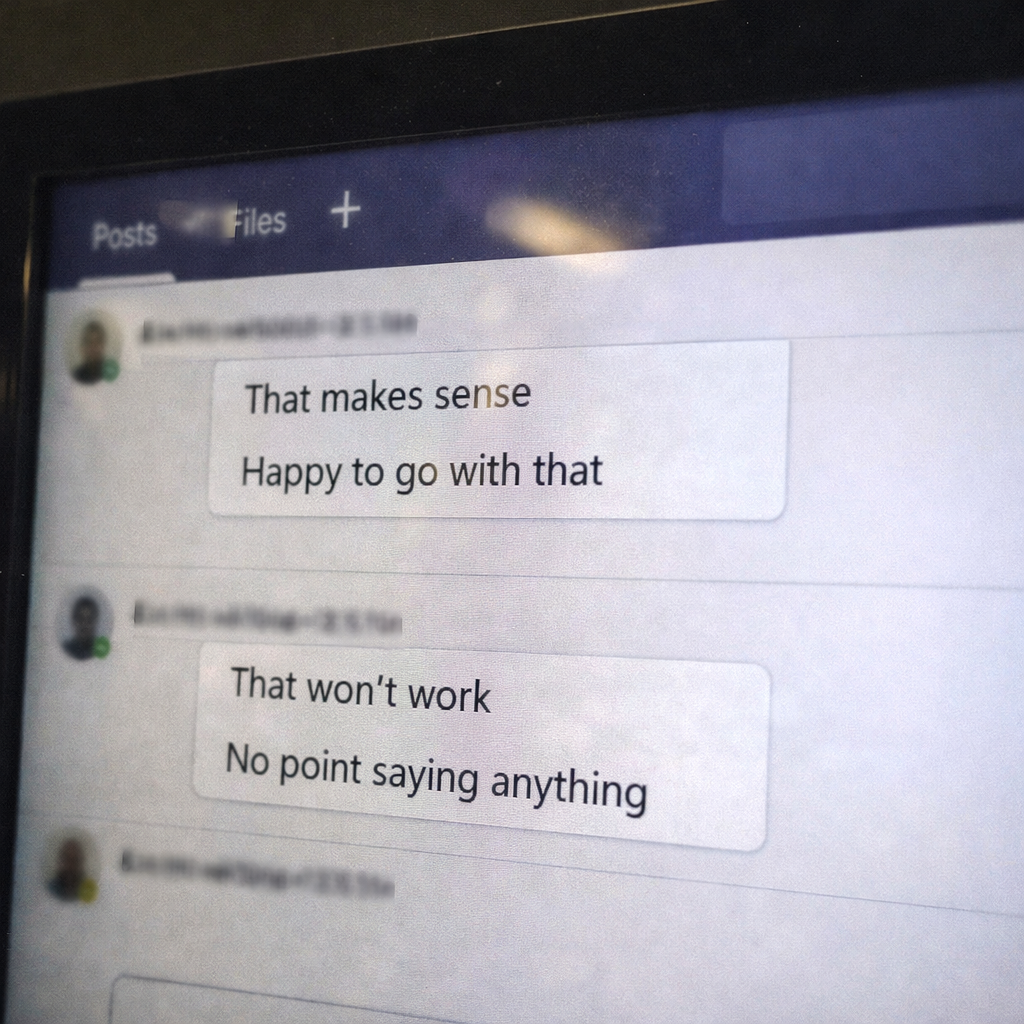
When everything sounds aligned
In many organisations, meetings and discussions can feel positive and aligned. Phrases like:
“That makes sense”
“Happy to go with that”
“Let’s move forward”
suggest clarity and agreement.
And often, they are genuine.
But not always.

The conversations that follow
In some teams, a different conversation takes place outside formal settings. Concerns may be shared:
in smaller groups
in private conversations
after decisions have already been made
This doesn’t necessarily reflect disengagement.
It can reflect how safe or straightforward it feels to speak openly in certain contexts.
Why this gap exists
The difference between what is said publicly and privately can be influenced by:
perceived hierarchy
past experiences of speaking up
how challenge is received within the team
informal power dynamics
These factors shape behaviour over time.
The impact on decision-making
When important perspectives are not shared in the room, organisations may miss valuable insight. This can affect:
decision quality
innovation
risk awareness
Not because people lack ideas.
But because those ideas are not always visible at the point of decision.
Making the invisible visible
Understanding this gap requires more than surface-level observation. It involves exploring:
where people feel comfortable speaking
how feedback is received
what patterns exist across teams
This is often where structured culture diagnostics can provide clarity.

Final thoughts
Organisations don’t just need to hear more.
They need to understand what might not be being said.
Because that’s often where the most important insights sit.

Nicole Williams is an occupational and coaching psychologist specialising in culture repair, team dynamics and psychologically safe workplaces.
Comments