
Is it really a personality clash? Understanding behaviour in context

When a team is struggling, the explanation often becomes personal.
“There is a personality clash.”
“She is very controlling.”
“He is resistant to everything.”
“If those two could just work together, the team would be fine.”
Sometimes individual behaviour is central to the problem.
There are employees whose conduct is inappropriate, harmful or incompatible with expected professional standards. Leaders should not avoid individual accountability by attributing everything to the system.
However, focusing only on personality can prevent organisations from seeing how the wider environment is shaping, amplifying or rewarding the behaviour.
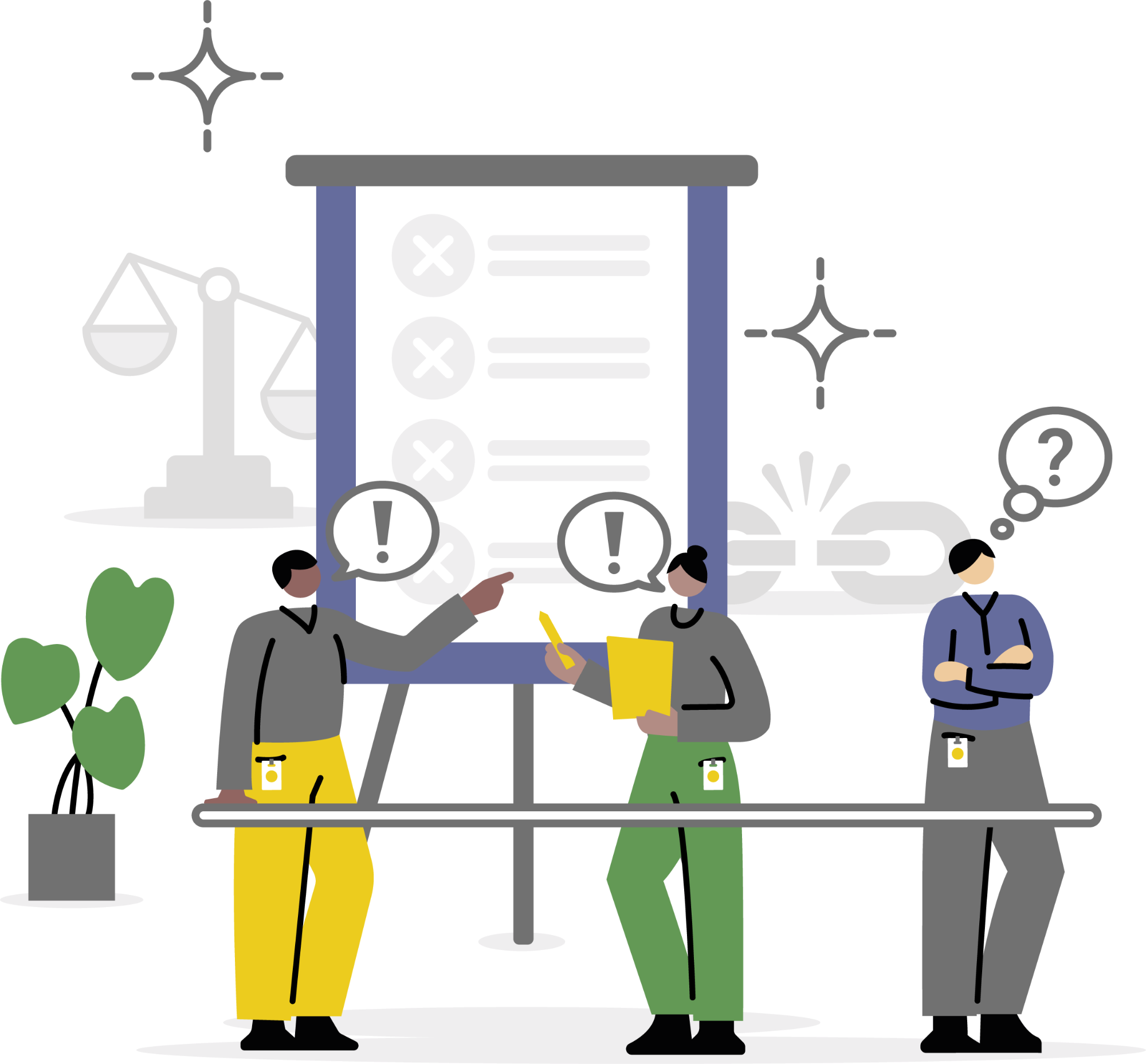
Personality does not operate in isolation
People bring relatively stable tendencies into the workplace.
Some may be more assertive, cautious, emotionally reactive, competitive, accommodating or independent than others. But the way those tendencies are expressed is influenced by context.
A person who is confident and decisive in a healthy environment may become controlling in a threatening one.
Someone who is naturally careful may become avoidant when they fear criticism.
An employee who values harmony may remain silent about harmful behaviour because disagreement feels unsafe.
The individual matters.
So does the situation.
What happens when people feel threatened?
When people experience uncertainty, exclusion or loss of control, they often move into self-protective patterns.
These responses can loosely resemble flight, freeze or fight.
Flight
Some people withdraw.
They reduce their contribution, avoid meetings, take sickness absence, seek another role or leave the organisation entirely.
Their behaviour may be interpreted as disengagement or lack of resilience.
But it may reflect a belief that withdrawal is the safest available option.
Freeze
Others remain physically present but psychologically disengage.
They stop sharing ideas, avoid taking a position and keep their heads down.
They may say:
“I am not getting involved.”
“I just come in and do my job.”
This protects them from becoming a target but also reduces learning, communication and collective problem-solving.
Fight
Other employees try to regain control more actively.
They may become confrontational, resistant, passive-aggressive or highly controlling.
They may build alliances, dominate information or challenge decisions repeatedly.
This behaviour can be harmful and still be understood as an attempt to restore agency in an environment that feels unsafe or unpredictable.
Explanation is not the same as excuse.
Understanding the mechanism simply gives the organisation a better chance of changing it.
How systems amplify difficult behaviour
Certain organisational conditions can make unhealthy behaviour more likely.
These include:
unclear roles;
inconsistent leadership;
perceived unfairness;
limited autonomy;
poor communication;
frequent change without explanation;
unresolved grievances;
tolerance of incivility;
competition for resources or status; and
lack of confidence in formal processes.
Under these conditions, people may rely more heavily on control, avoidance, defensiveness or informal influence.
The same individuals may behave very differently in a team with clear expectations, fair processes and psychologically safe leadership.
The risk of the “problem person” narrative
Once a team agrees that one individual is the problem, every interaction may be interpreted through that lens.
The person’s behaviour becomes highly visible, while the actions of others receive less scrutiny.
Leadership may stop examining its own contribution.
Colleagues may feel justified in excluding the person because they believe they are protecting the team.
Even when the individual leaves, the team may continue to struggle because the wider conditions remain unchanged.
This is one reason organisations sometimes replace a supposed problem employee only to find that another person eventually takes on the same role within the team dynamic.
Hold individuals and systems accountable
A psychologically informed approach avoids choosing between individual and systemic explanations.
It asks both:
What behaviour is this person responsible for?
What conditions are helping the behaviour emerge or continue?
The response may include individual feedback, performance management, coaching or formal processes.
It may also require clearer leadership, revised structures, improved communication or wider team intervention.
This is not about removing accountability.
It is about applying accountability at every appropriate level.

A more useful question
Instead of asking only:
“Who is causing the problem?”
Leaders should also ask:
“What is happening in this environment that makes this behaviour more likely, more powerful or harder to challenge?”
That question does not absolve anyone.
It makes the diagnosis more complete.
How I can help
I support organisations to distinguish between individual conduct concerns and the wider team or organisational conditions shaping behaviour.
This helps leaders avoid simplistic “personality clash” explanations while still ensuring that harmful behaviour is addressed appropriately.
When the situation has become highly personalised, an independent diagnostic can help separate evidence, perception, behaviour and context.

Nicole Williams is an occupational and coaching psychologist specialising in culture repair, team dynamics and psychologically safe workplaces.
Comments